
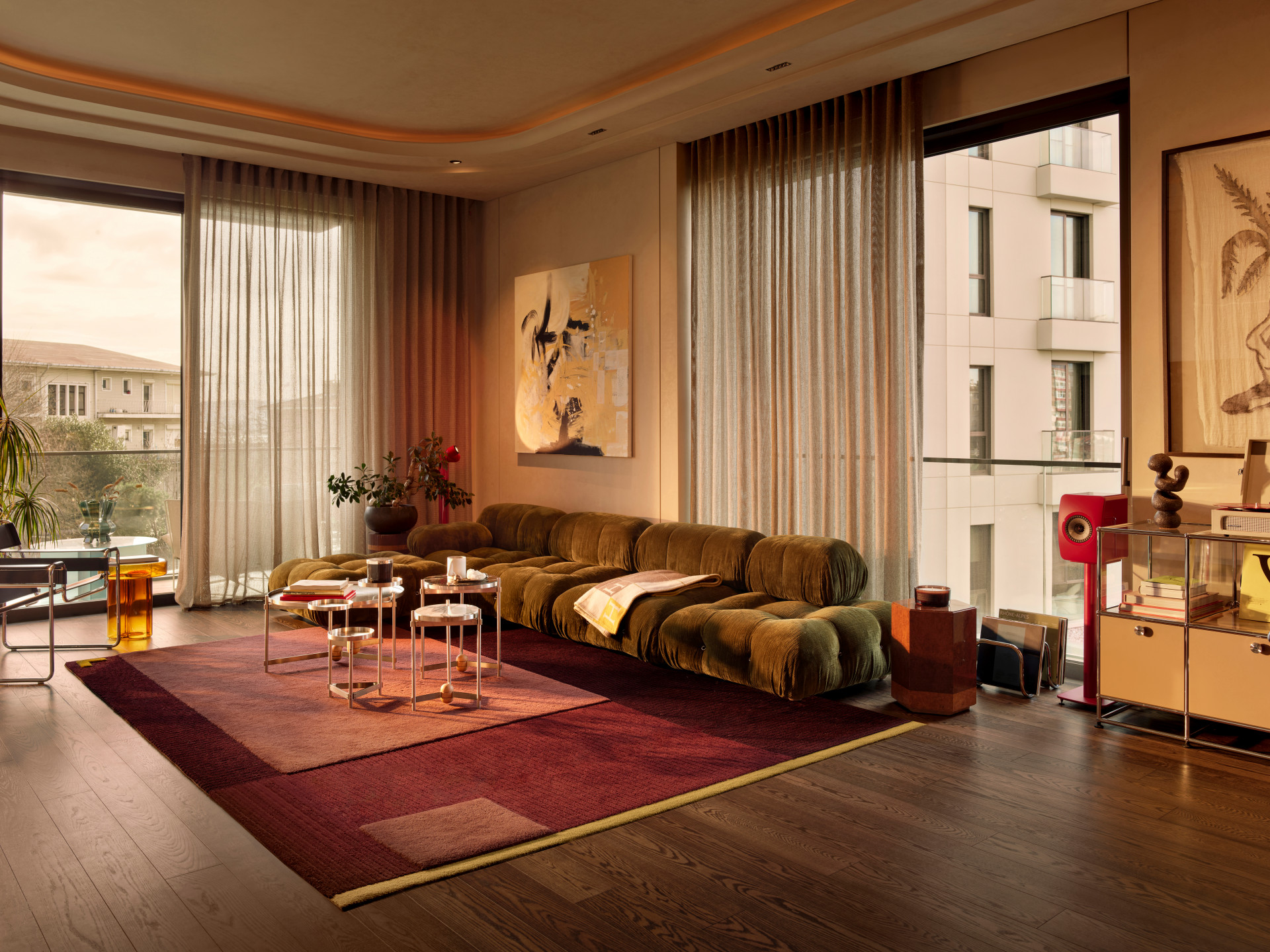
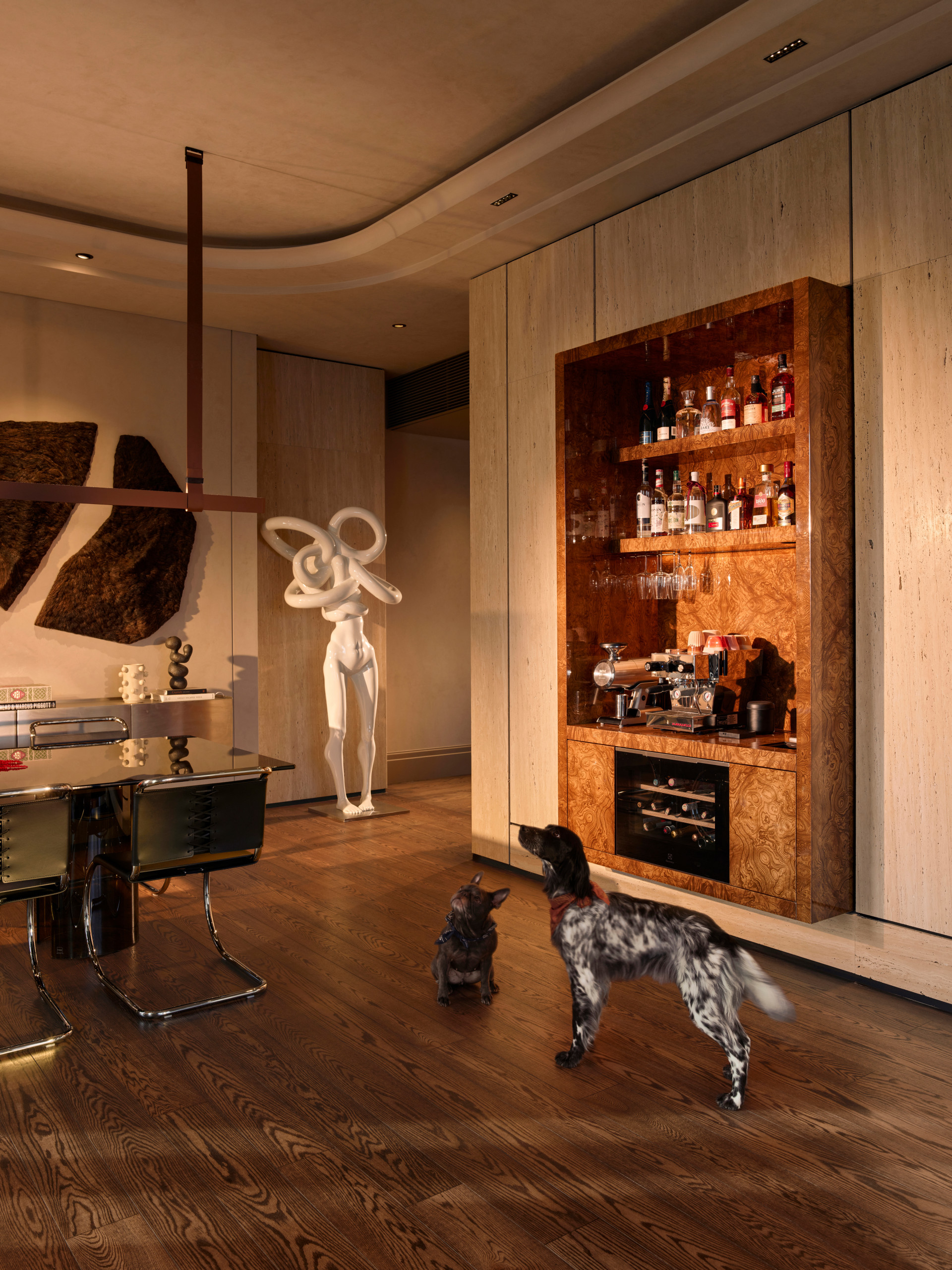
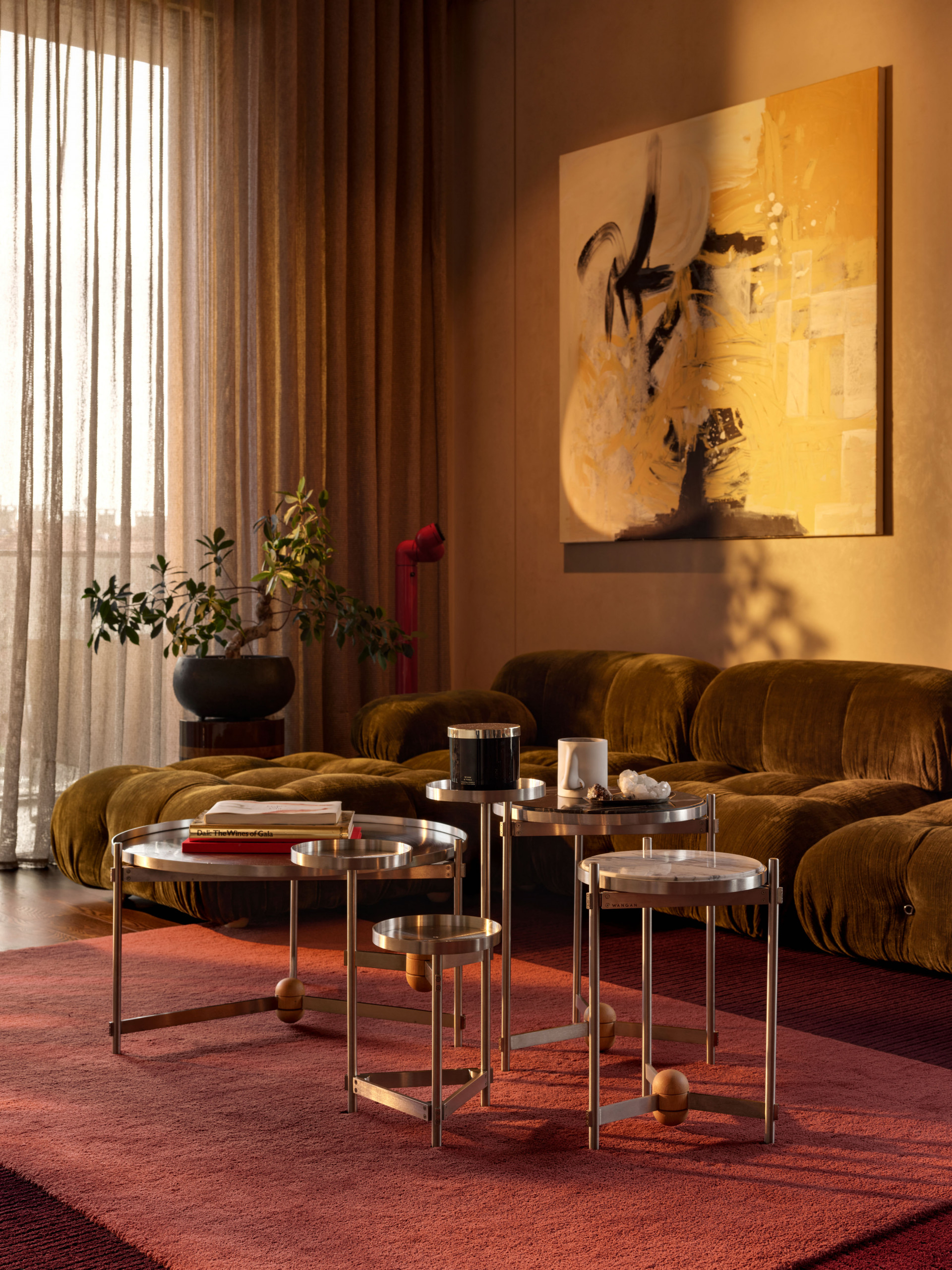
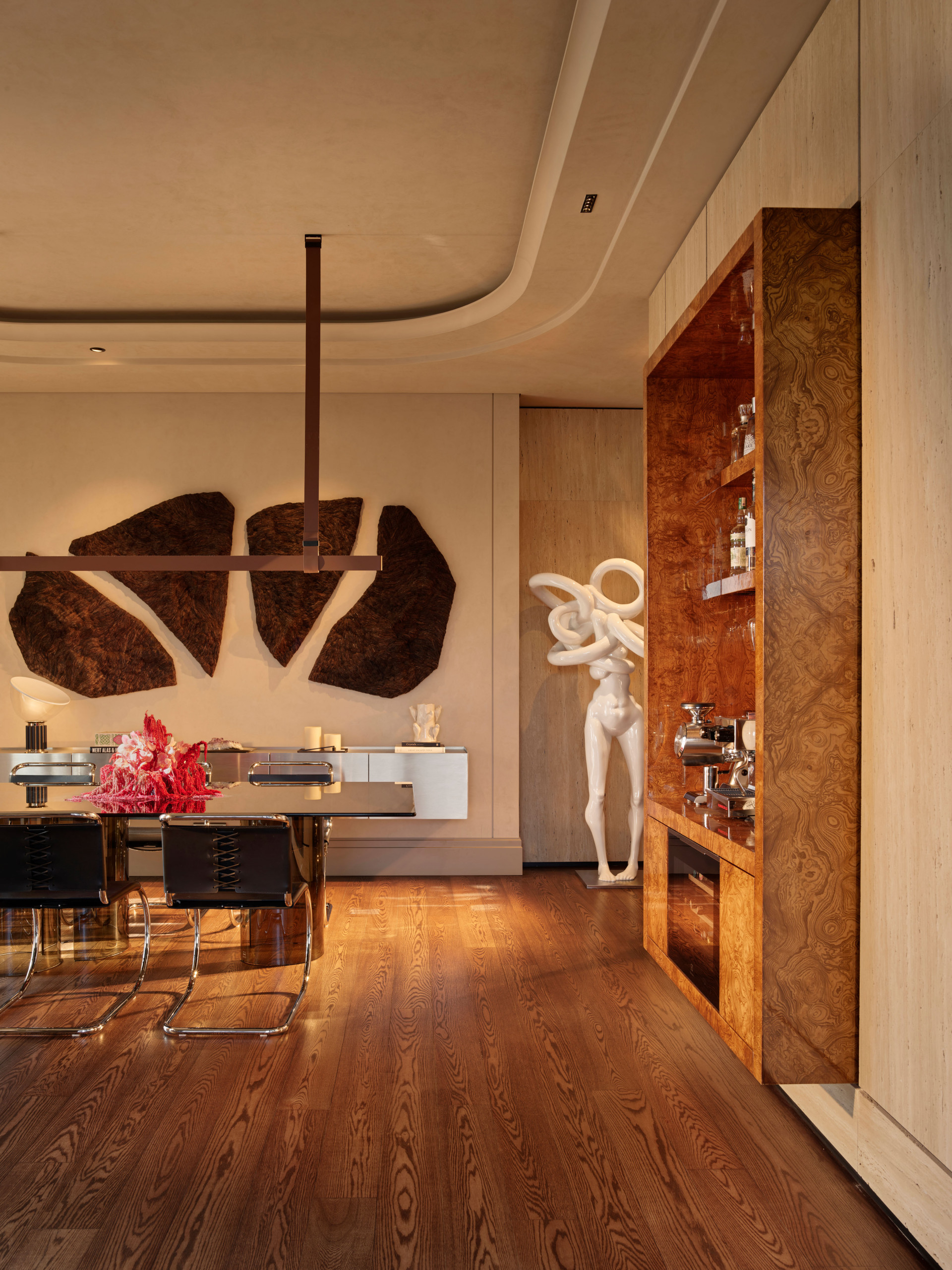
F House was designed with the aim of transforming a residential apartment in Istanbul into a more personal, layered, and lived-in space. The starting point was not a sterile, anonymous residential atmosphere but a domestic narrative in which art, music, and daily rituals become natural constituents of the space. The clients sought a home with a strong aesthetic character that was, at the same time, calm and balanced. Toward this end, the continuity of natural materials, built-in furniture integrated with the architecture, and a design language established through collected objects were used to build a timeless atmosphere across every room.
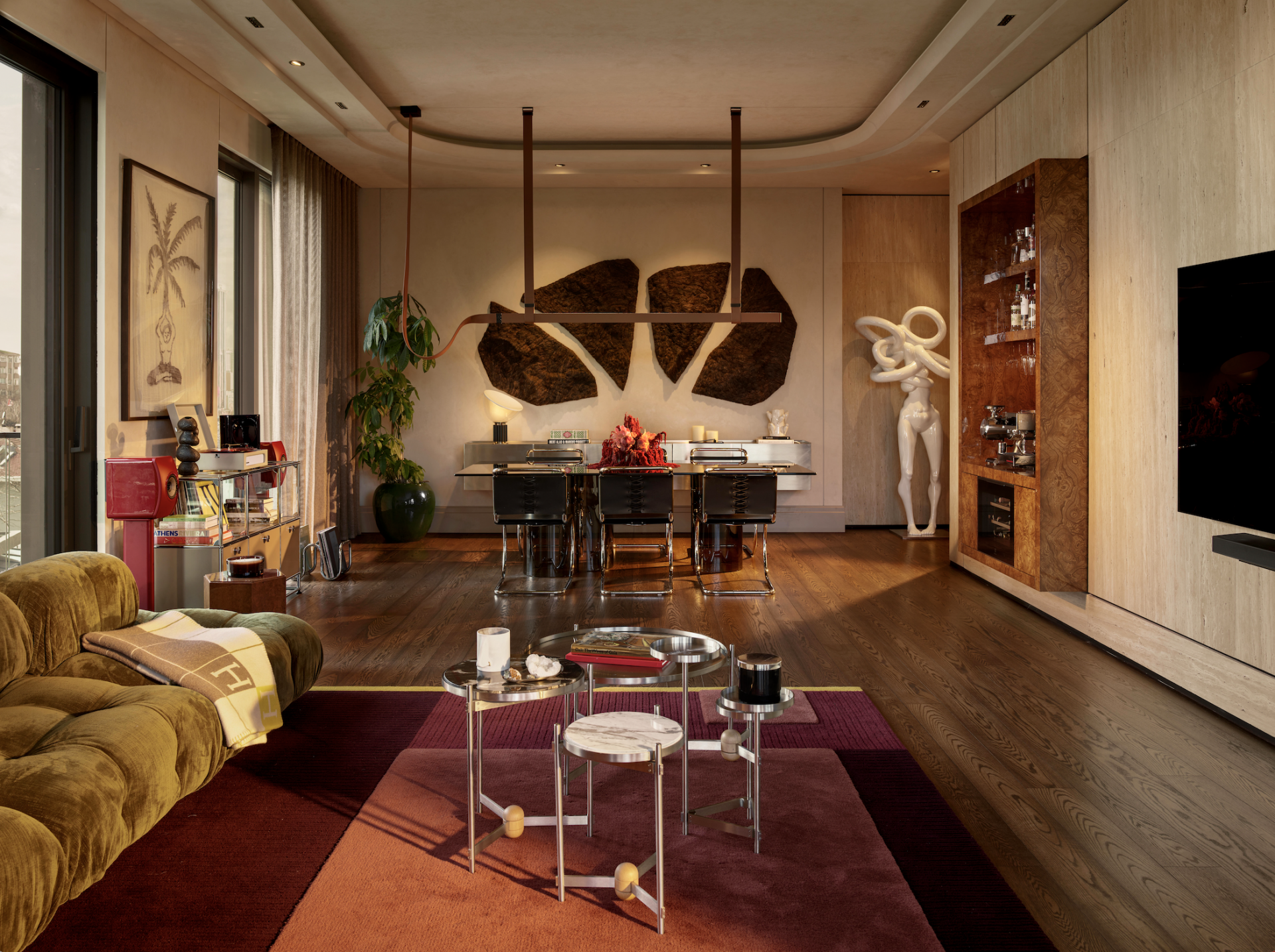
In terms of plan, we aimed to transform spatial perception and establish surface continuity by making use of every intervention the structure allowed. The conventional entrance hall arrangement found in the delivered plan was reconsidered in favor of a layout that establishes a more direct relationship with the living area. The threshold between the entrance and the salon, previously defined by a conventional door, was removed, creating a more permeable and continuous connection between the two spaces.
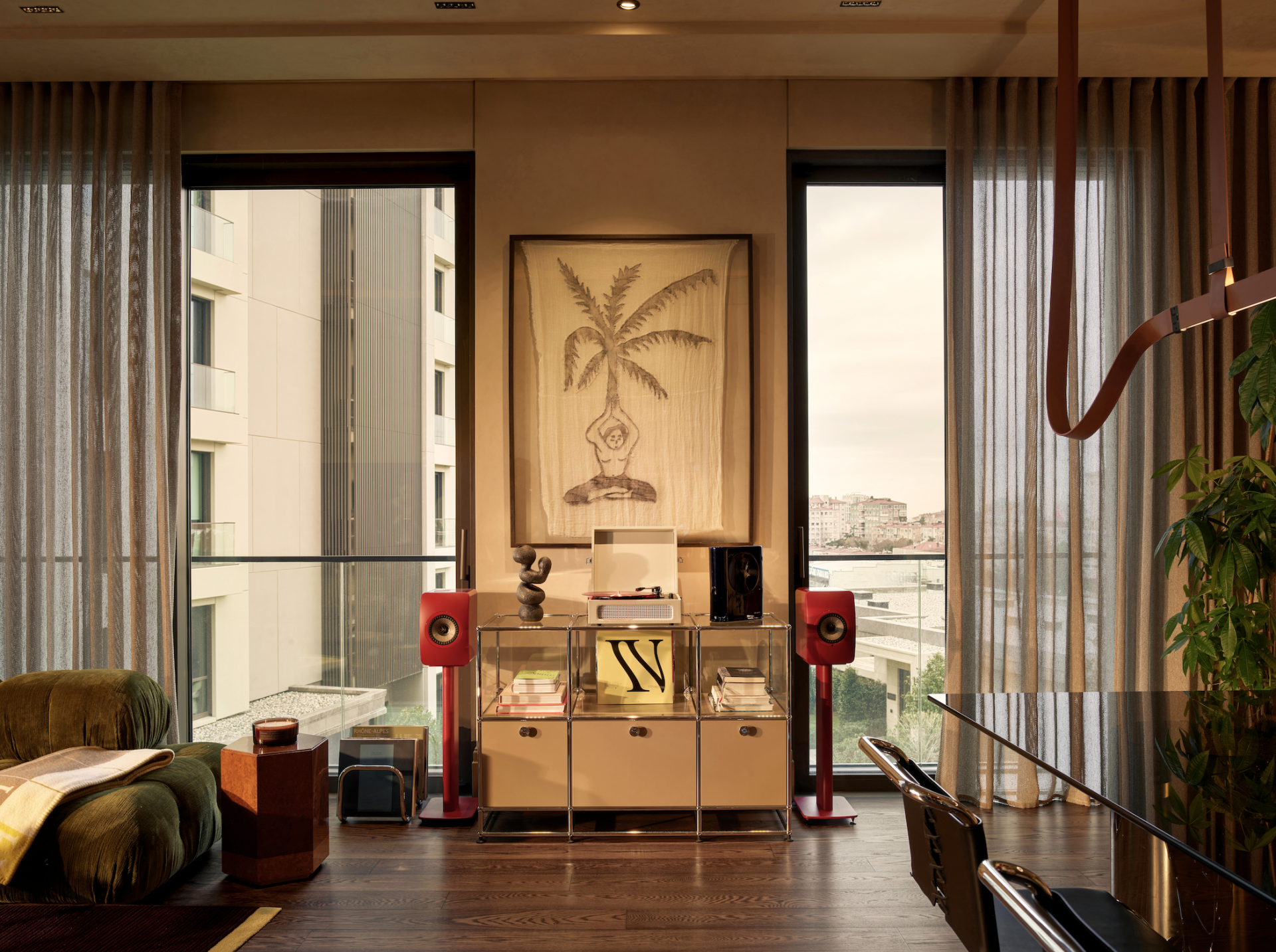
The hi-fi listening corner, positioned between the living and dining areas, was designed as both a listening space and a personal collection area that directly brings the clients' daily habits into the room. It was treated not simply as an acoustic corner but as an expression of the home's character.
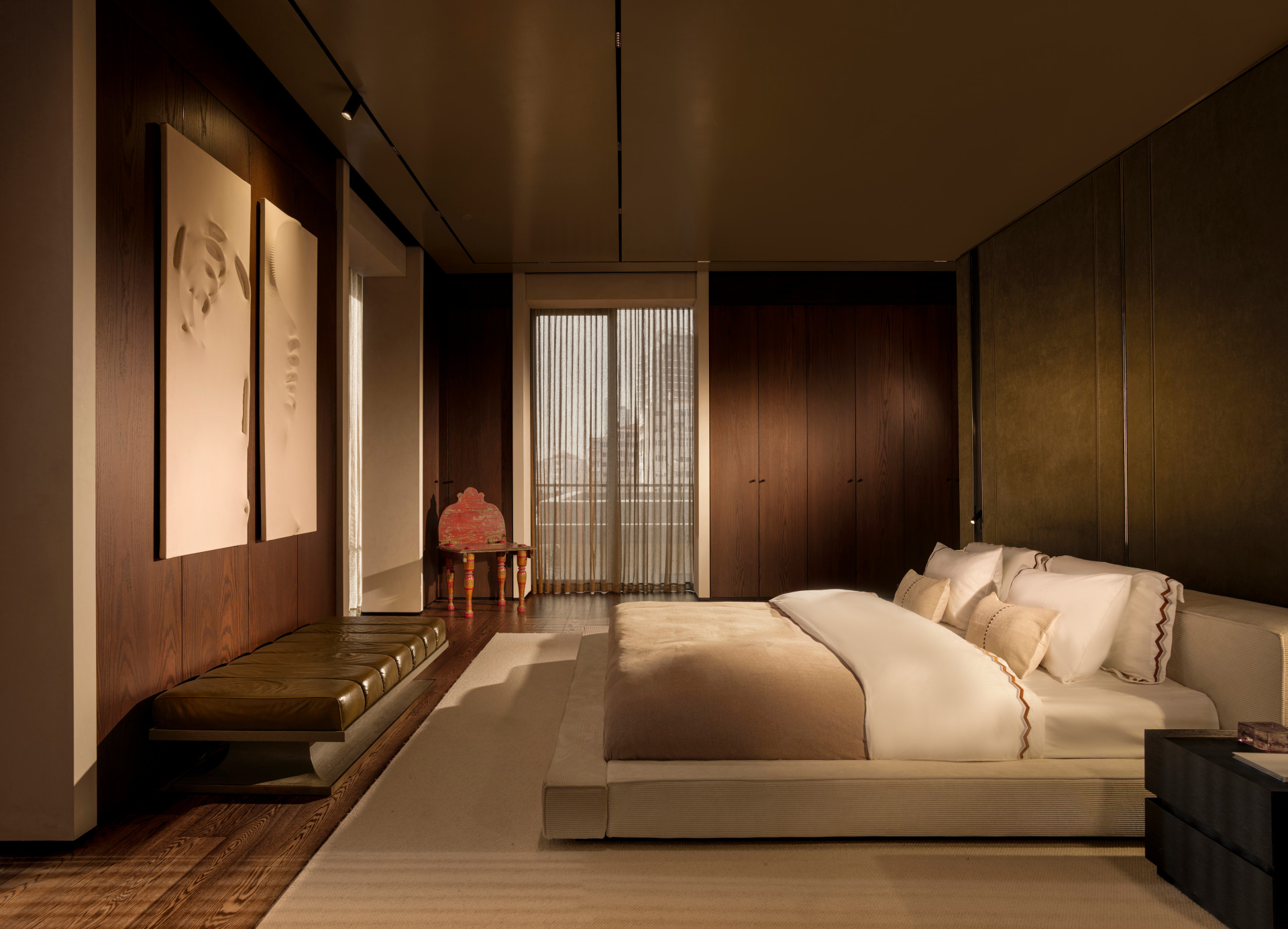
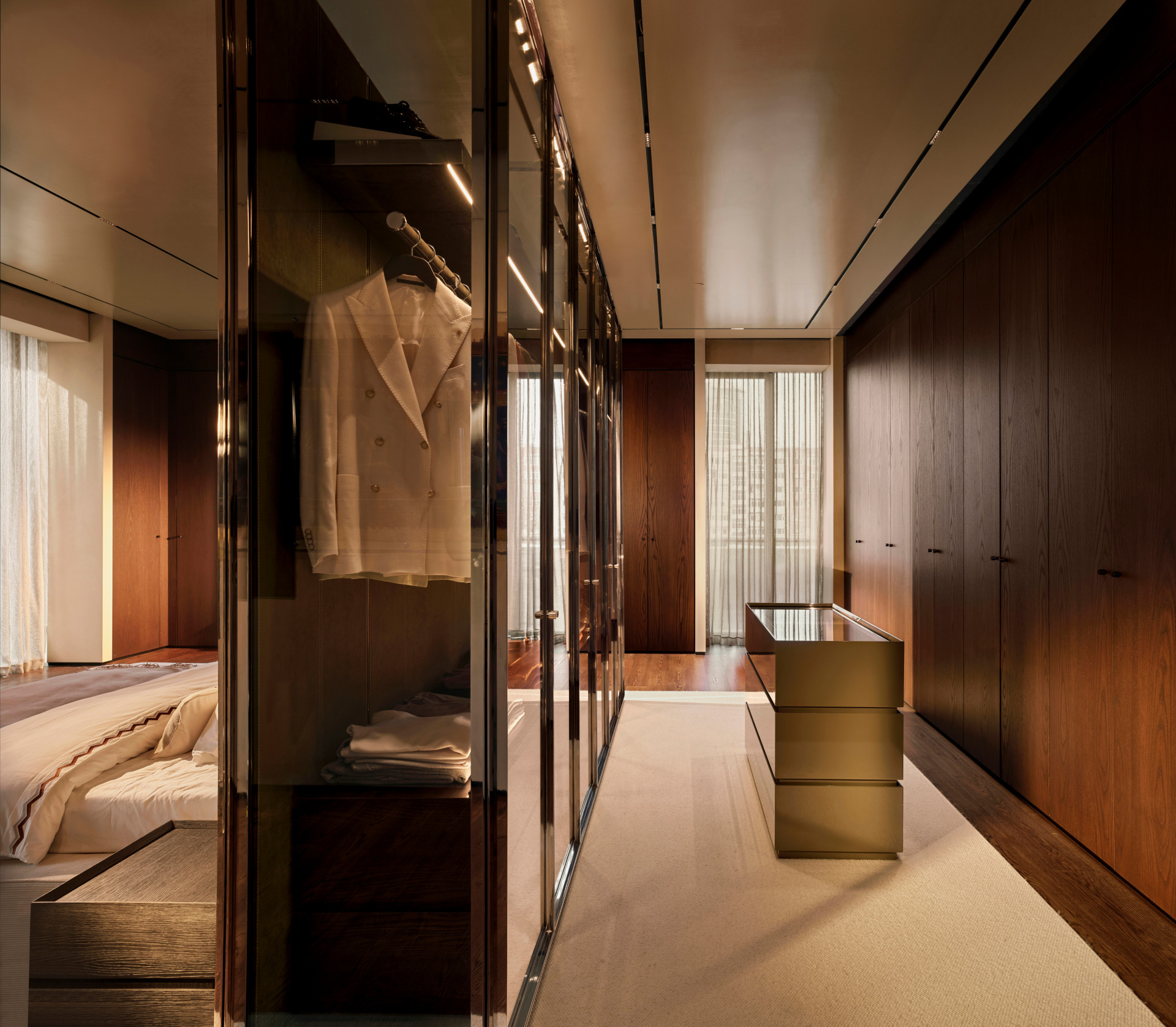
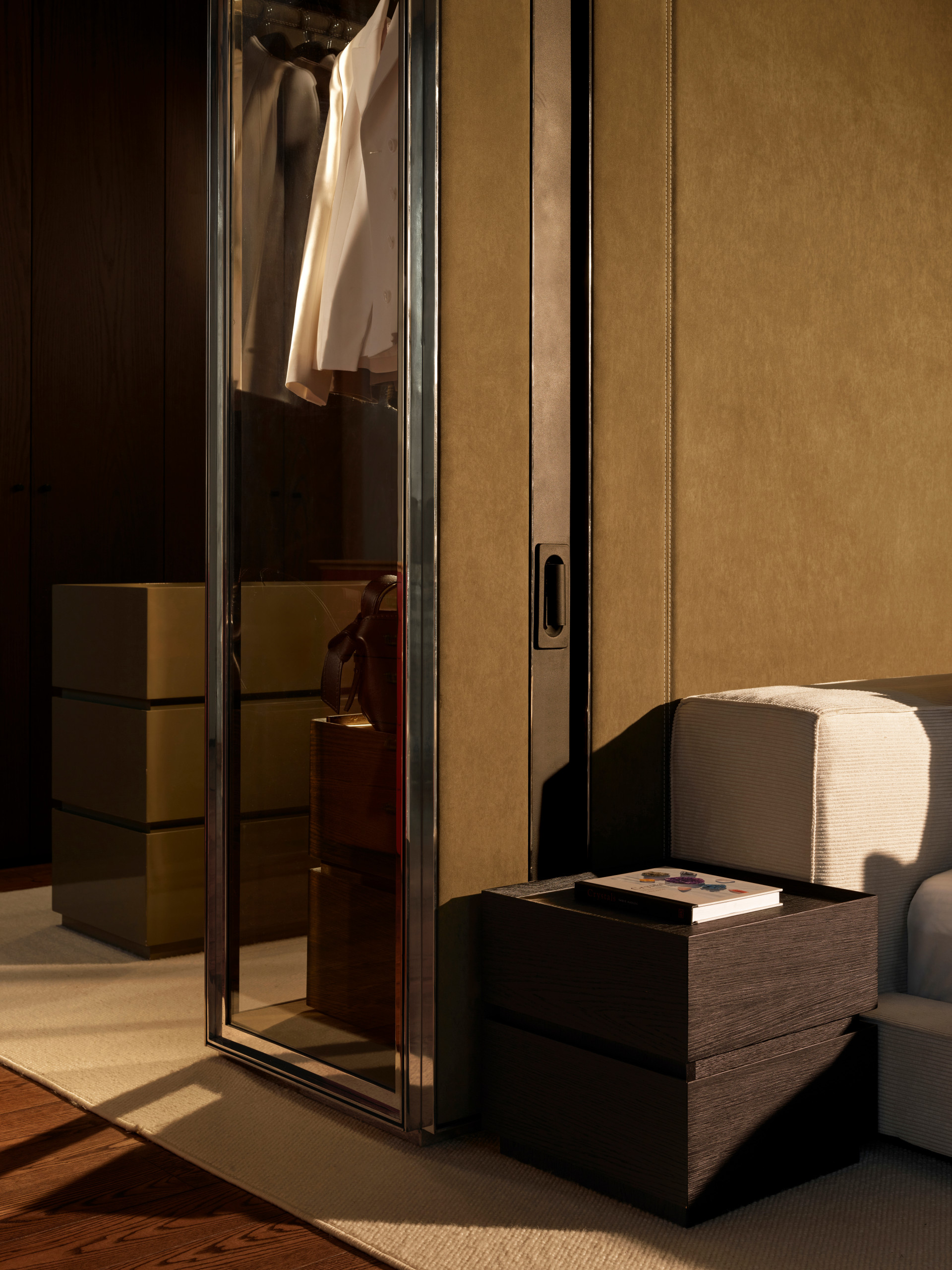
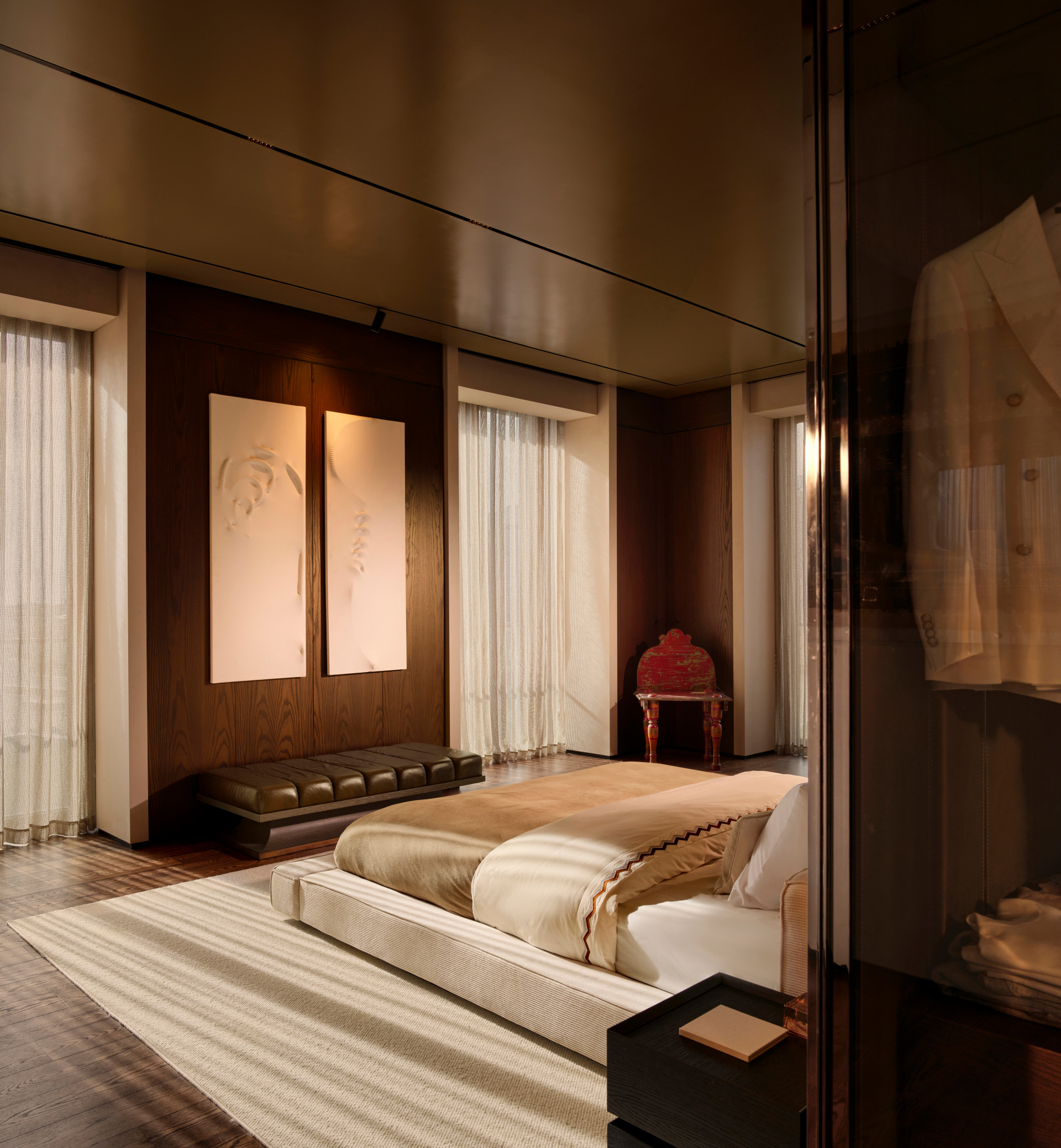
In the master bedroom, the aim was again a characterful but quieter atmosphere. Two rooms defined in the original plan as a bedroom and a dressing room were merged into a single, cohesive master suite, producing a spatially more open solution while preserving the same degree of privacy. Oak timber surfaces running along the wall were designed as integrated wardrobes; the decorative painted frames at the wardrobe terminations and the joinery elements were detailed to maintain the room's architectural continuity. A low platform bed and light-toned textiles were used to soften the atmosphere.
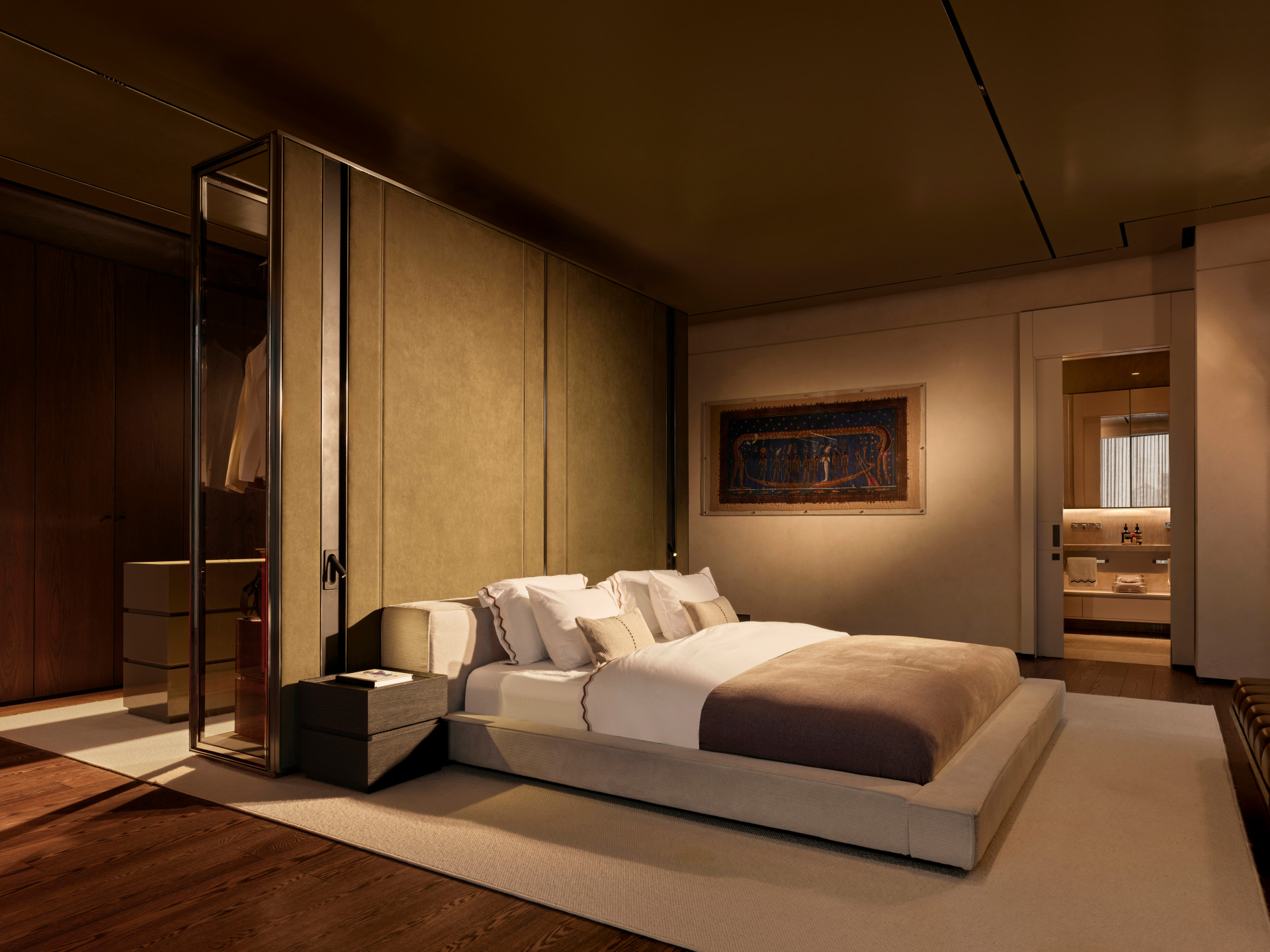
A glazed cabinet volume, placed at the center of the room and treated as a sculptural object, was designed to become part of the room's architectural composition. This sculptural volume, combining glass, mirror, and brushed stainless surfaces, was conceived not merely as a storage element but as a secondary volume within the space, separating the sleeping and dressing areas in a fluid yet functional way.
Through these design decisions, F House became a layered spatial composition in which architecture, furniture, art, and everyday habits converge. The continuity of natural materials, the relationship between collected objects and the spaces they inhabit, and the integration of lived routines into the design produced a home that is personal, timeless, and genuinely occupied.